
Services
Useful information

How to choose a pet transport company
Our furry friends rarely travel as much as we do. They are usually attached to home and only go out for walks. That makes transport stressful for them, and loving owners, worried about their pet's life and health, take a long time choosing someone who can arrange the journey in the greatest comfort.
What to look for when choosing a carrier:
1. A contract with a safety guarantee
Anything can happen on the road. But a pet feeling car sick and a pet escaping from a badly closed crate are different degrees of responsibility.
Sadly, in trying to save money, both owners and carriers often ignore the interests of the animal itself. Hence cramped carriers, unequipped vehicles and a hungry, exhausted pet on arrival. For Animal Trips, animals are passengers, not freight. That is why we fit out our vehicles for transport, train drivers in handling animals, include a guarantee in the contract and accept payment only to the company bank account.
2. Experience with paperwork for international transport
Transport abroad involves many details. Each airline follows its own rules for animals, and each country has its own rules for the entry and customs clearance of pets. Lack of experience can often end with the animal being refused boarding.
Since it was founded, Animal Trips has built up vast experience in transporting animals around the world; we have our own pool of reliable customs brokers and we help with the veterinary examination, the passport and microchipping. For us bureaucracy is not a nightmare but a daily routine, and one we can take off owners' hands.
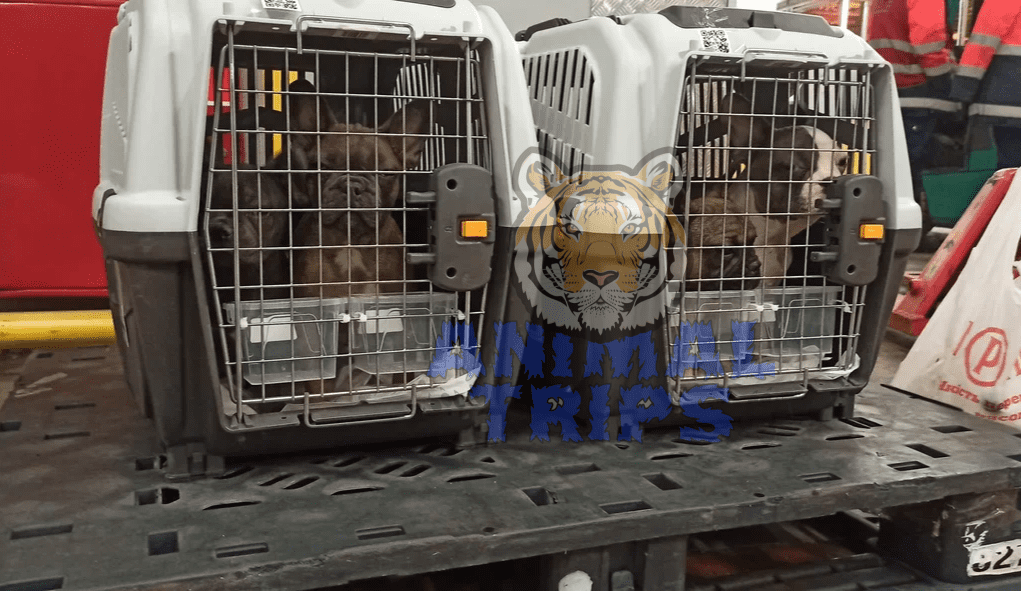
3. Love of animals
As we said, anything can happen on the road. The animal may be stressed, hungry or travel sick. That is when the carrier has to show all their patience and gentleness to calm it.
Besides, pets are living creatures that can be noisy and, let's be honest, need to relieve themselves. Nobody likes the smell or sitting on a wet pad, so cleaning has to be done as quickly as possible.
When we transport animals by road, we plan the route with stops for feeding, walking and cleaning. Feeding on the move is dangerous, as the animal can choke, so we fit only drinkers in the crates. We walk them strictly one at a time to avoid conflicts. On trips to Europe two drivers work in shifts, which keeps journey time to a minimum and gives the passengers round-the-clock supervision. You can't always carry even your own pet in such comfort :)