
Services
Useful information

Transporting pets by bus
Many people take their pets along when they travel. For the trip to go well and without problems, you need to know the rules for carrying animals by bus.
City and suburban routes are fairly clear, but if you are going to another city, let alone another country, things get more complicated. Some long-distance buses simply do not admit passengers with animals; others do, but with many requirements. To take an animal abroad by bus you need a veterinary passport showing vaccinations and the relevant travel documents. For travel in the EU the pet must be microchipped.
As you can see, there are plenty of details and it is not easy to keep track of them all. What to do? Contact our company: we will sort out all the arrangements and handle the transport quickly and without problems.
Transport rules

On intercity routes, small dogs, cats, hamsters and birds are usually allowed on board, provided they are in containers, carriers or cages with a solid base.
Large dogs can travel if several conditions are met: the animal must be clean, on a short lead, muzzled and vaccinated against rabies (carry the certificate). It usually travels at the rear of the bus, next to its owner, so buy your ticket for those seats.
The exact conditions depend on the country and the bus company, so confirm them before buying your ticket.
As for the fare: if the cage or carrier is small (no more than about 120 centimetres across its three dimensions), it is usually treated as hand luggage and nothing is charged, though you will have to keep the cage on your lap the whole way.
For a large dog you need to buy a baggage ticket, and you may be offered an extra ticket at half price, which entitles you to put the cage on the next seat or keep the animal on a lead beside it.
On public transport the owner must watch the animal's behaviour: it must meet hygiene requirements and not disturb or frighten other passengers. The animal may not be left unattended.
Which documents are required?
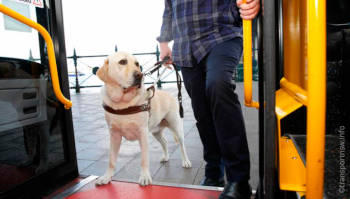
The main document needed to take an animal on a bus is a veterinary certificate showing rabies vaccination. The validity periods for the vaccination and the certificate depend on the country.
If your animal was vaccinated long ago, or never, have it vaccinated well ahead of the trip and make sure this is recorded in the veterinary passport. If there is no passport, have one issued.
A few days before the trip, go to the clinic with the animal to obtain the certificate: the vet examines the pet, checks the vaccination details and issues the document.
What restrictions apply?
So you have your ticket and all the veterinary documents, but you may still be refused boarding: if the animal is wet or dirty and could soil other passengers, or if the dog barks loudly, is aggressive or resists getting on. This is typical of pets that have never travelled on public transport. Not having a lead and muzzle (large dogs) or a carrier (small pets) can also be grounds for refusal.


